
The Answer Was "No"
Outside a detention center on the outskirts of Chicago, a small act of faith meets the machinery of the state.

I left before the tear gas, but I was there for the tears.
On Saturday, November 1, a group of religious leaders gathered outside an unmarked, windowless warehouse on the edge of an industrial park. It is a “processing facility,” the euphemism used for a place where human beings are detained by ICE. The leaders—mostly elderly priests and nuns—had come to offer communion to those inside.
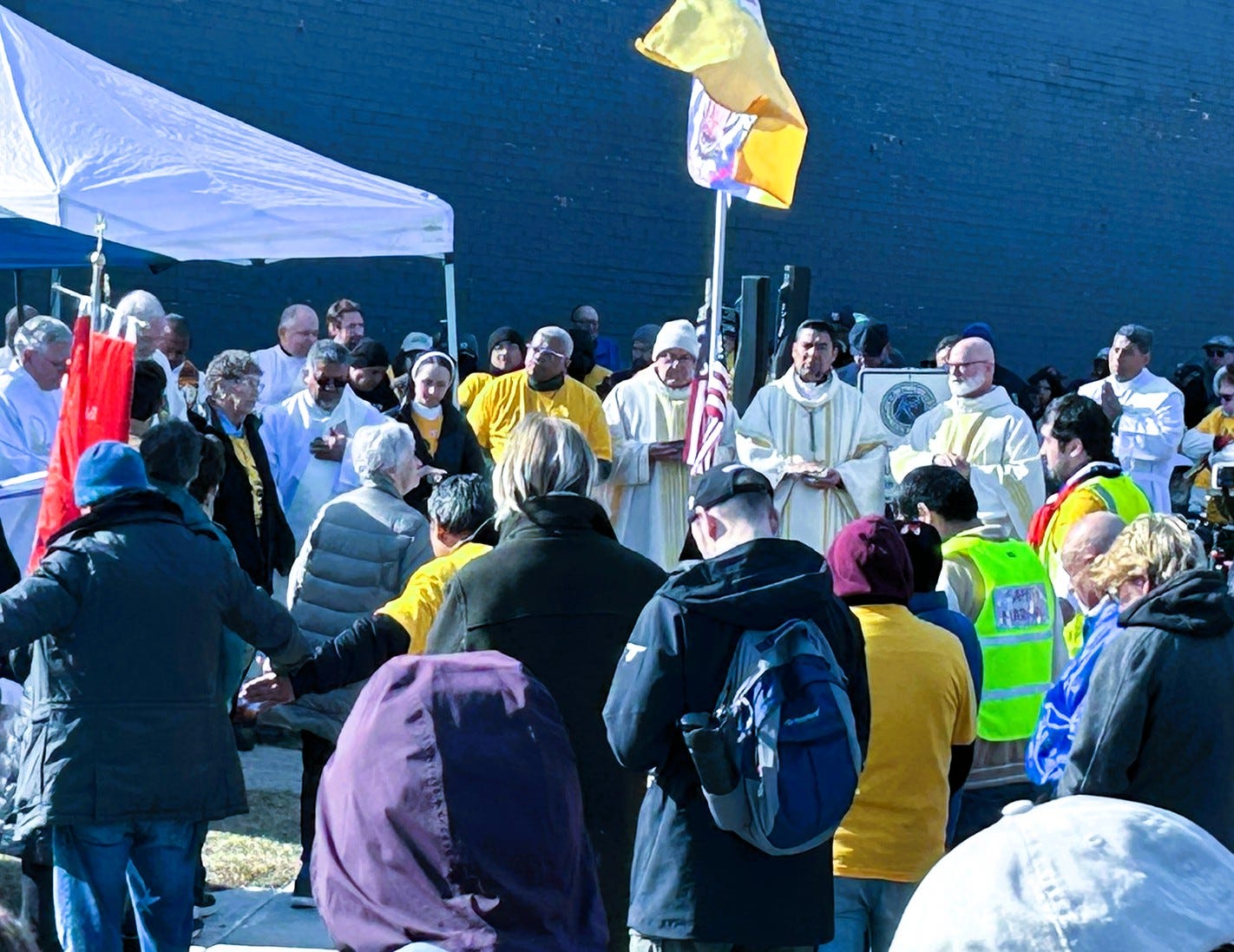
They prepared to walk a short stretch of forbidden road leading to the facility’s entrance—the same road the black, tinted-glass vans use to ferry detainees into custody. It’s a road I have never stepped onto myself, afraid of being arrested. But that morning the priests and nuns walked it as far as the first line of state troopers. The troopers relayed their request to ICE. And after a brief pause, the group walked back toward us.
Sister JoAnn Persch, ninety-one years old, returned to the gathered crowd and told us over crackling speakers what had happened. She spoke softly, recounting how they had asked permission a week in advance, had followed every instruction, had cleared every procedural hurdle. Still, she said, “The answer was no.”
Then she was silent.
The no seemed to alter the air around us. It carried a silent pressure, like the moments before a tornado touches down. My hands, without my conscious knowledge, had clasped those of the people standing beside me—a man on my right, a woman on my left. I wonder now if I might have fallen over without them. Had they caught me? Had I blacked out?
I had just finished a run nearby. Sometimes, after running, I stop by the ICE facility—not for any particular reason, but because I feel I ought to look at it. To remind myself it exists. To pay a small tithe for the freedom to run so close to such an unfree place. That morning I was tired and dehydrated. And there was the matter of the no. It hung in the air, dense and heavy, among the few hundred of us gathered there.
The no was the denial of something so small: a few elderly priests and nuns asking only to bless their fellow human beings. To offer communion. To show kindness. The cruelty of the no was its pettiness. Its smallness gave it weight. It was the sound of a system revealing itself—an architecture of negation. Inside the warehouse, people lived within that no: stripped of communication, privacy, and medicine, uncertain whether they would ever see their families again. For the denial to remain complete, no act of humanity, however small, could be allowed to pass through the walls.
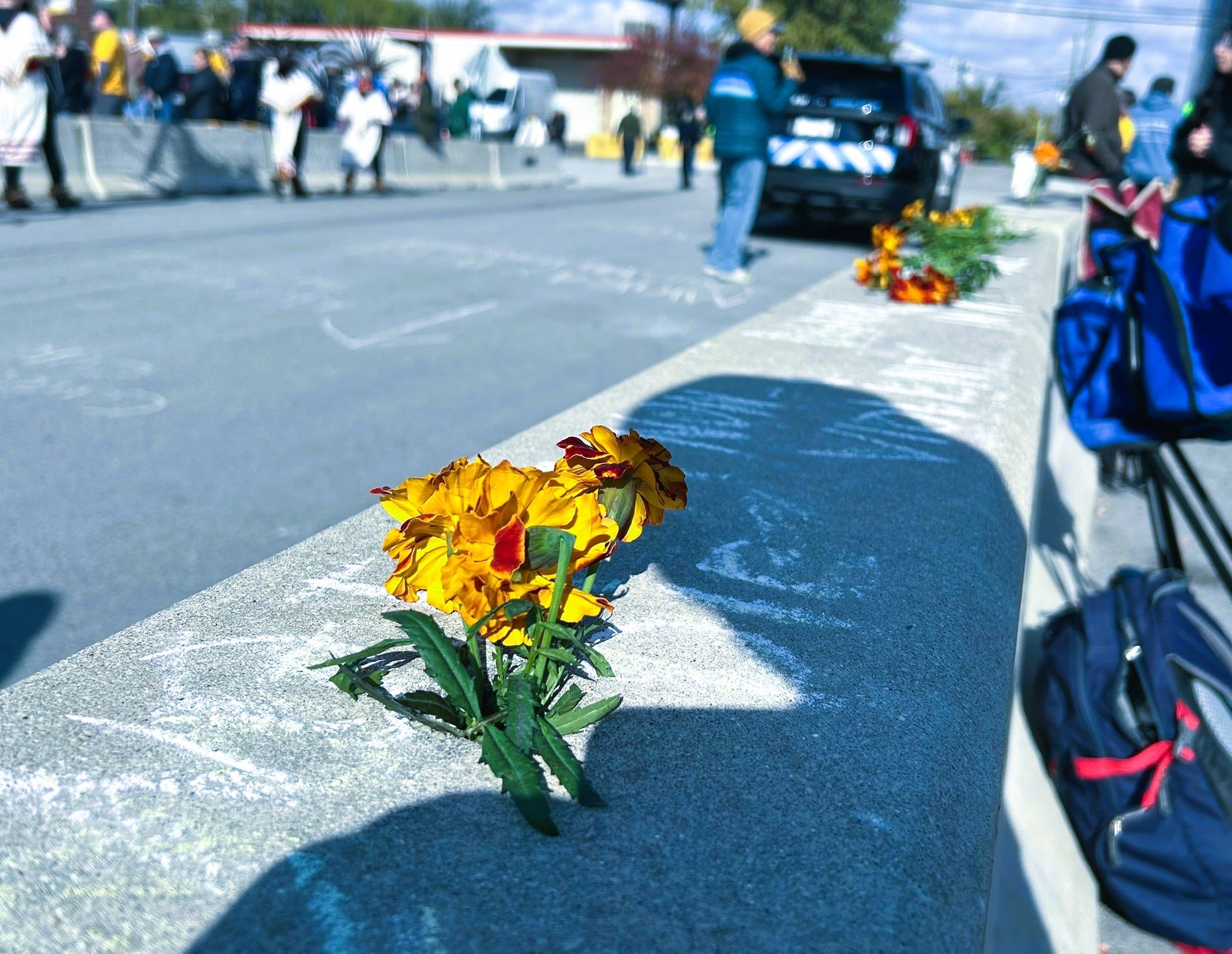
A few yards away, carnations—the traditional flower of November 1, meant to guide the dead back to the living—had been laid along the concrete barrier separating us from the troopers.
I thought about how absolute the dehumanization must be for those inside the system to continue their work. For the guards, the bureaucrats, the drivers—to live with what they do each day, the machinery must demand constant moral maintenance. No kindness can be permitted, because kindness might fracture the illusion that this is all merely procedure, that the people inside are somehow less than human. It is not a new thought. But within the silence of that no, it struck me with a visceral force.
I don’t remember how Sister Persch broke the silence. Only that, suddenly, the light seemed to shift—from cool to warm—and people began to breathe again. Some fell to their knees and wept. The wind picked up; it was chilly. The woman beside me, wearing heart-shaped sunglasses and a denim jacket, turned and asked softly, in Spanish, “¿No pueden entrar?”
I think that’s what she said. My Spanish isn’t great. Nevertheless, I answered.
I told her, as Sister Persch had told us: “No.”
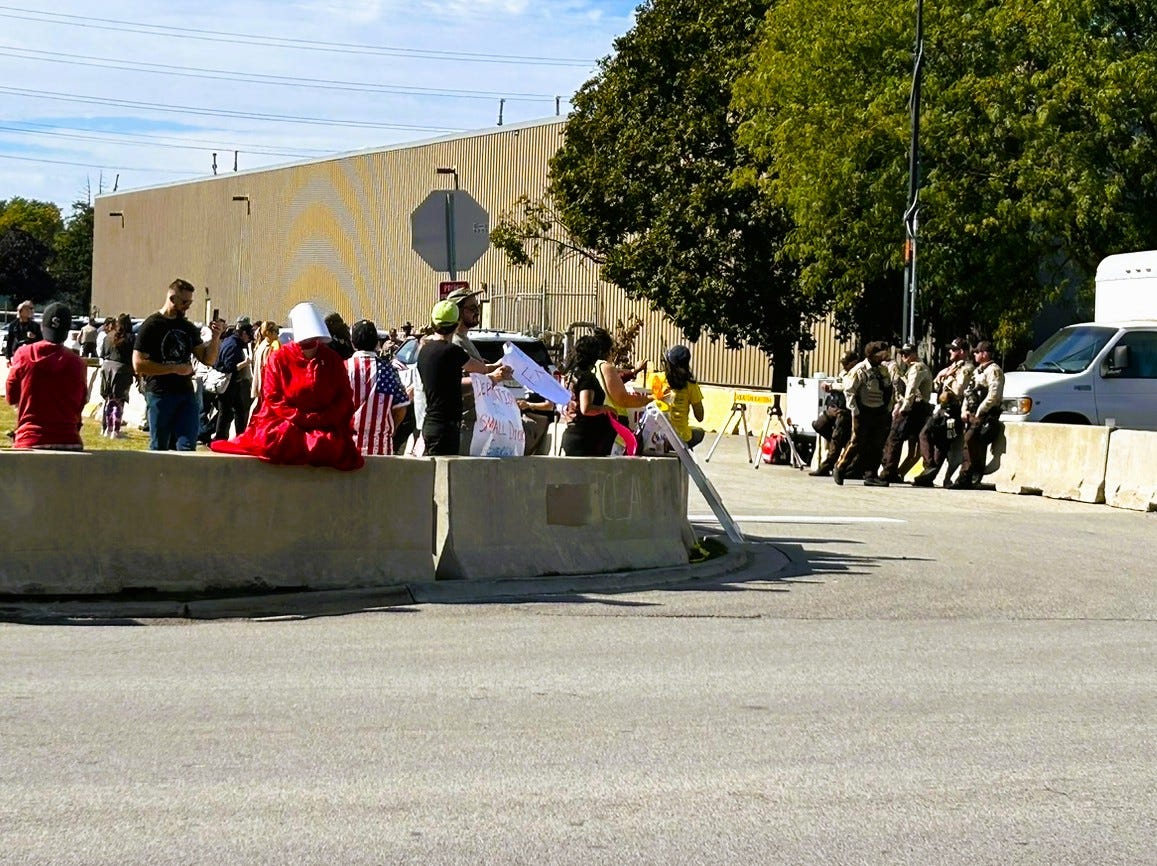
Later that day, police dispersed the protesters with tear gas and pepper balls.
Desire Paths is a bi-weekly newsletter that is supposed to be about technology and humanity. (That is, “What does it mean to be human in a technological age?”) But this week I’m just relating my experience FWIW. The only thing technological at these protests are the amount of people streaming to their YouTube channels — I have been at the ICE facility when there is about a 50/50 mix of streamers and protesters.